Slim 'N Trim Camellia
Versatile and Uniquely Compact Camellia with Rose-Pink Blooms
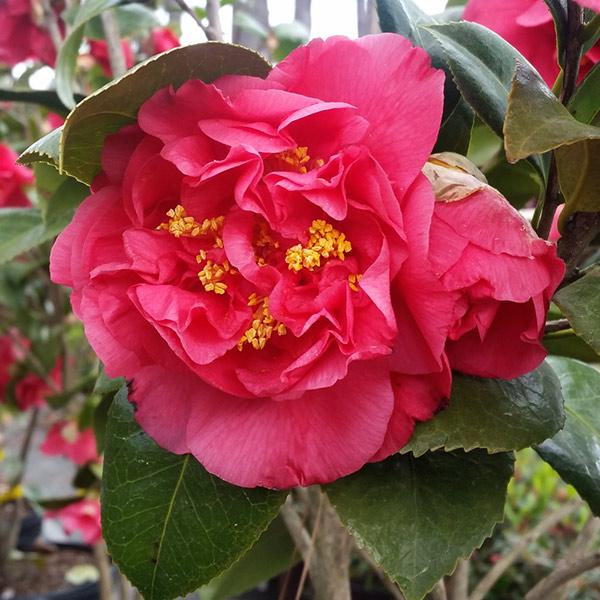
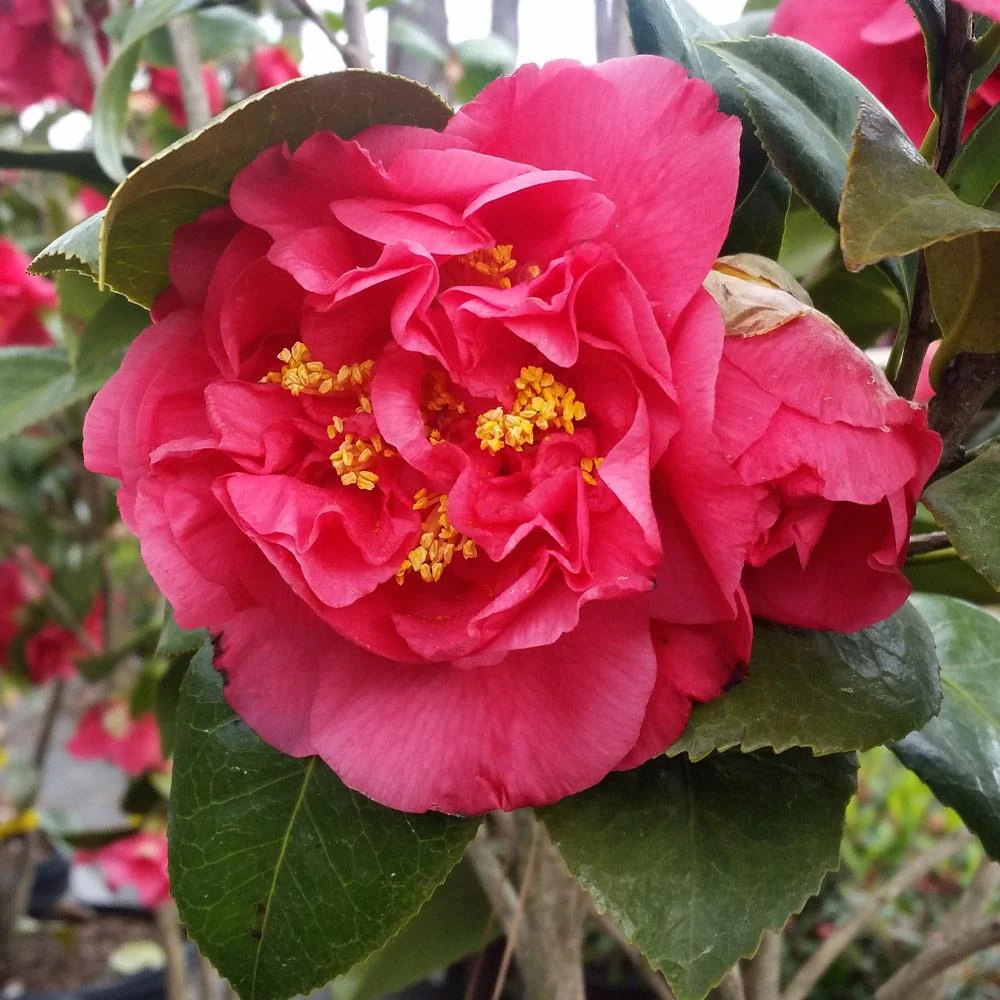
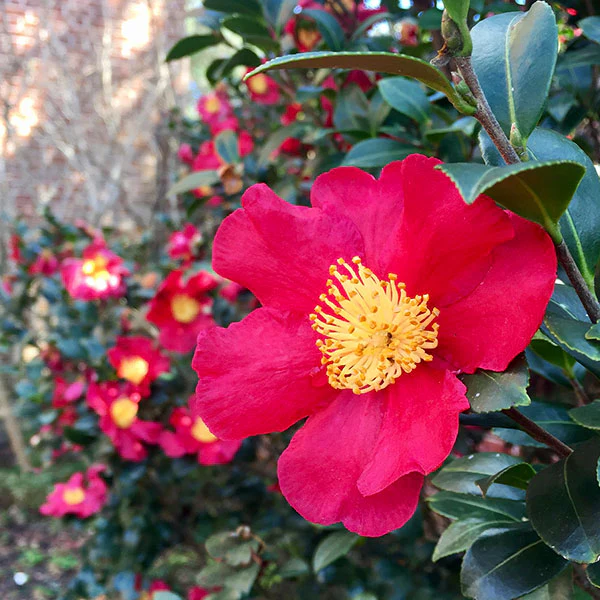
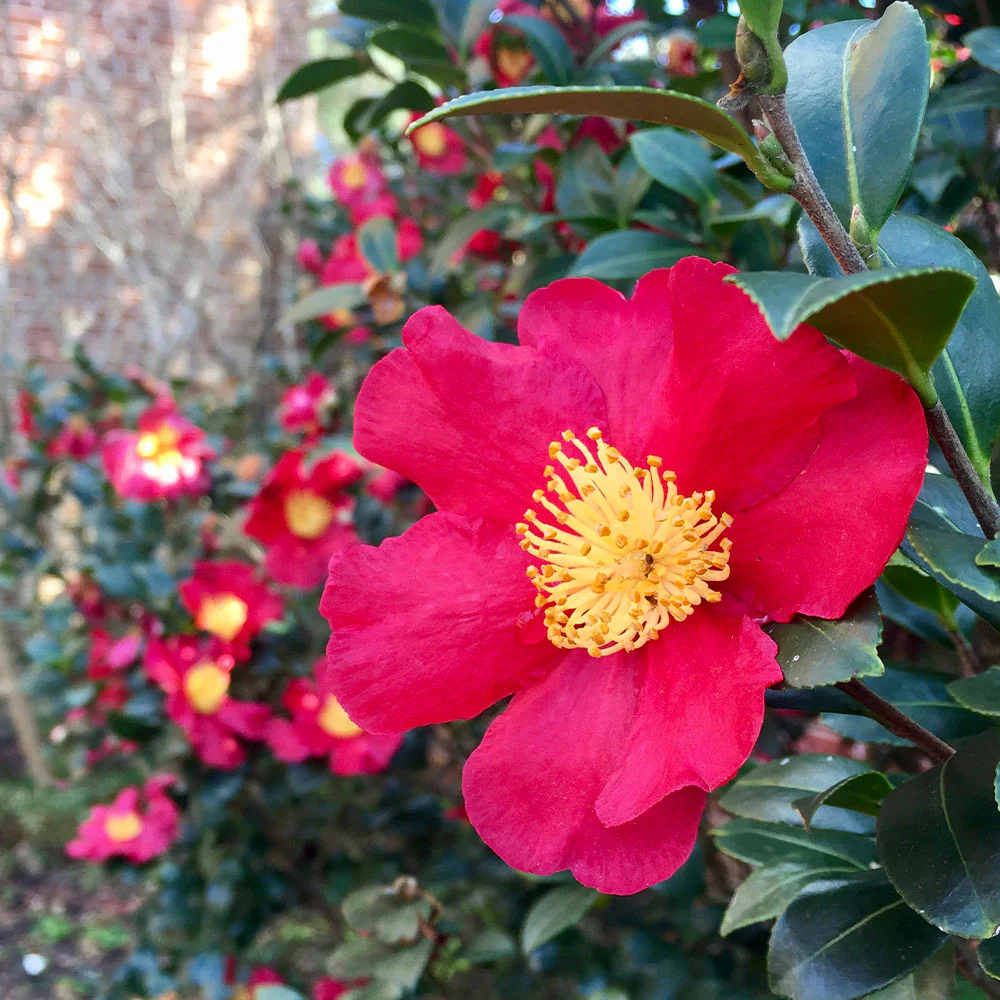
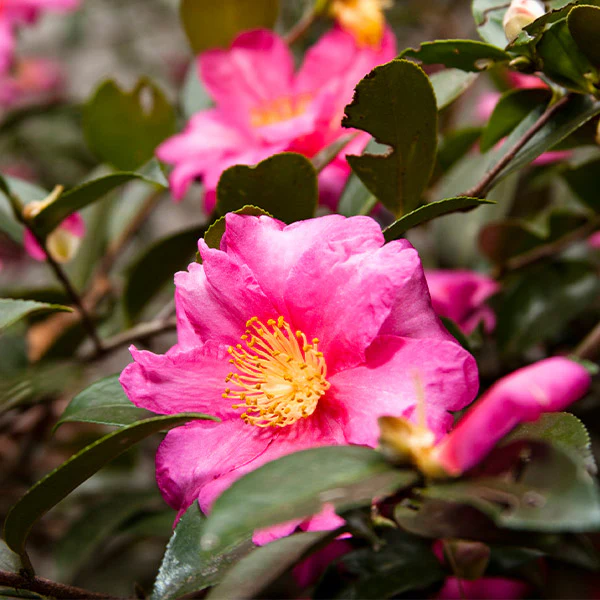
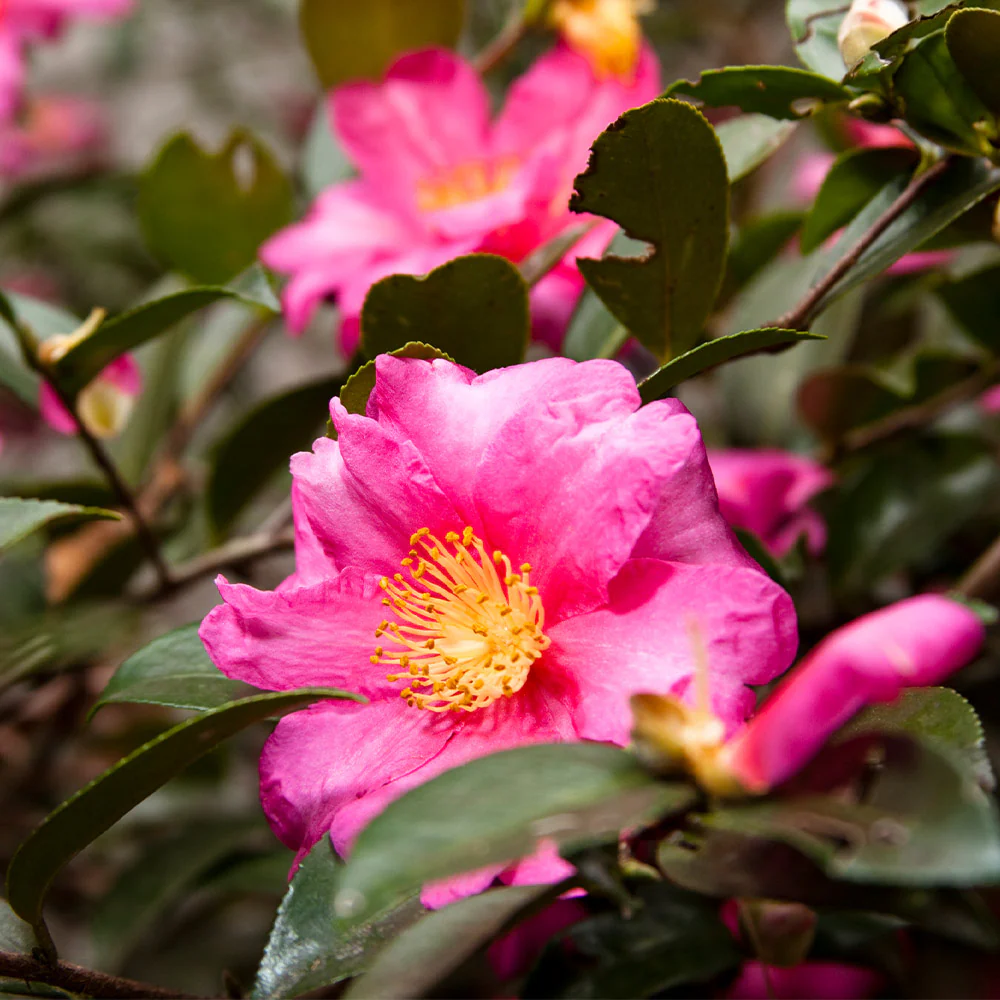
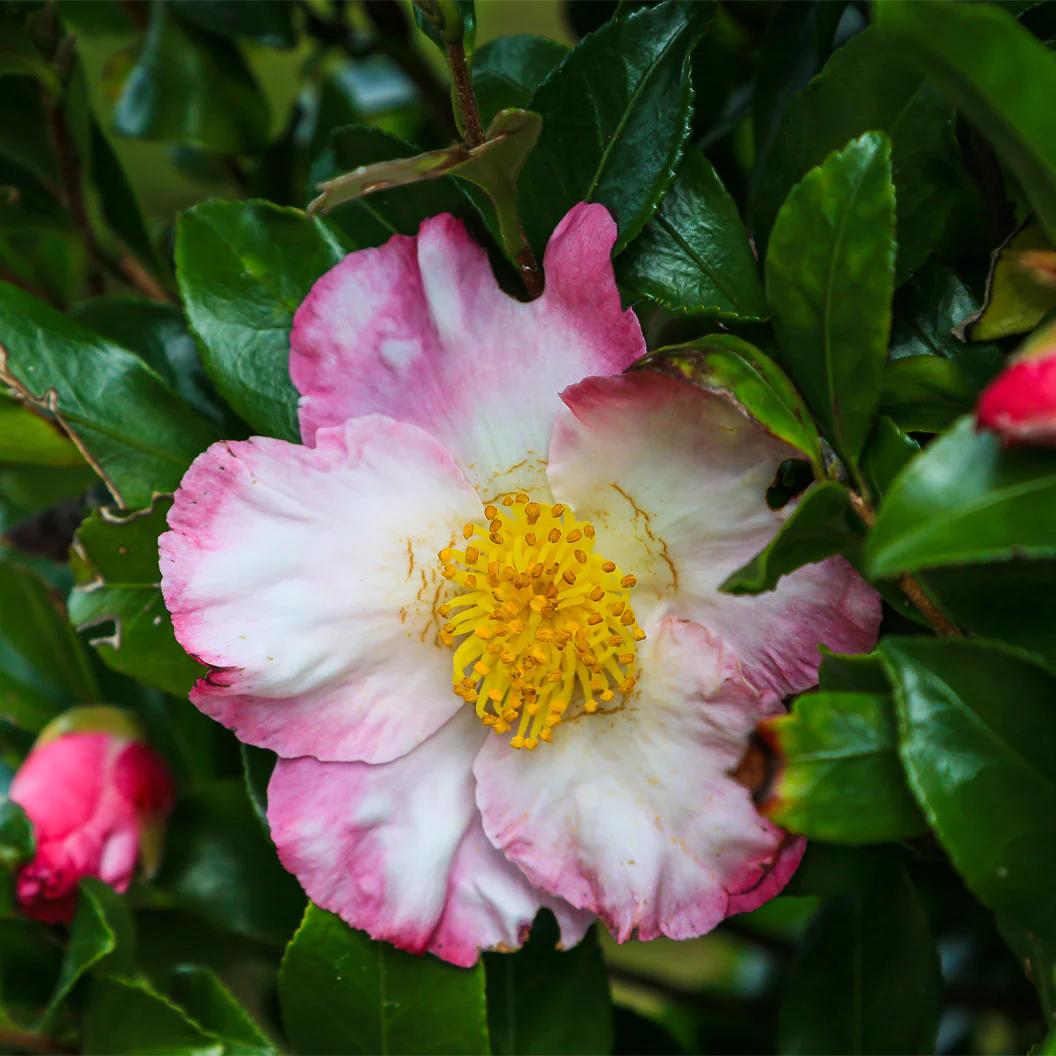
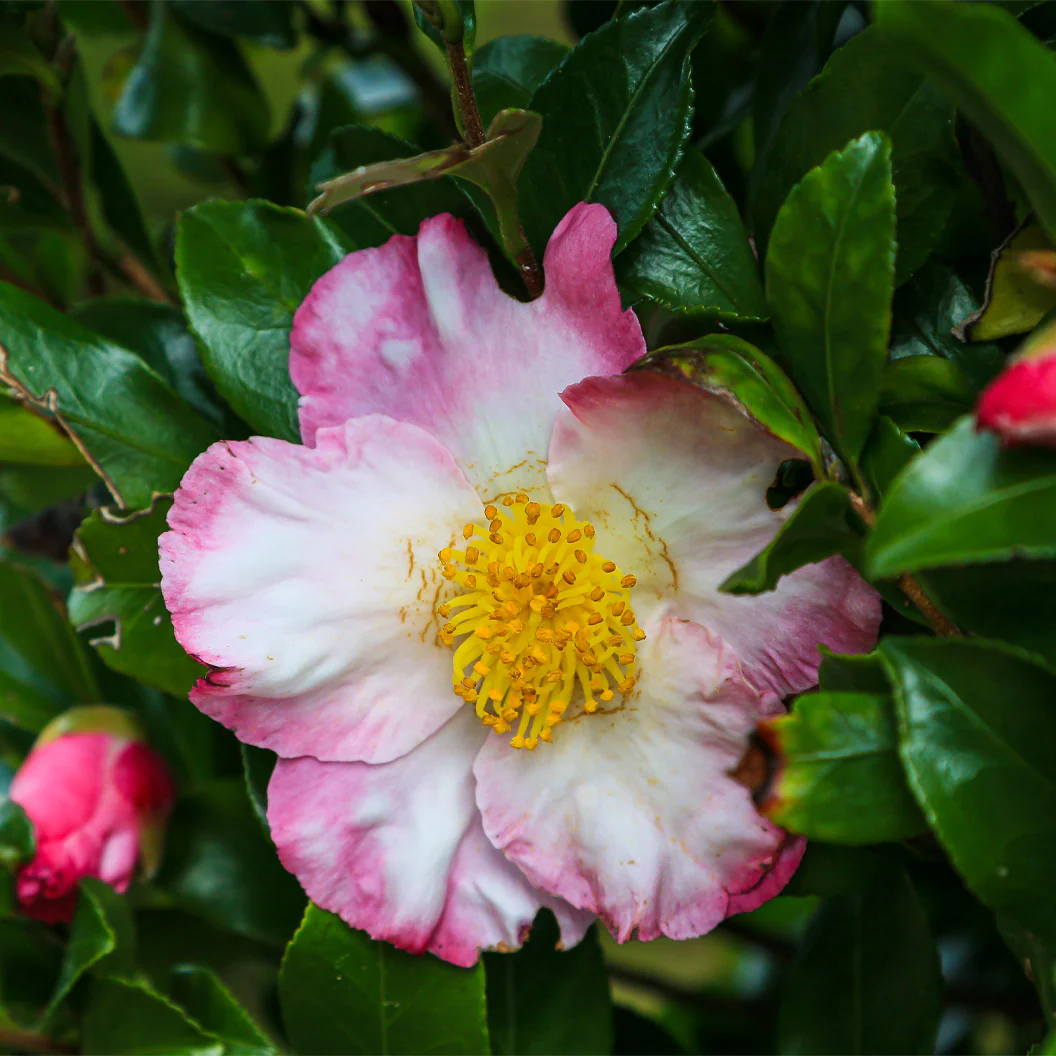
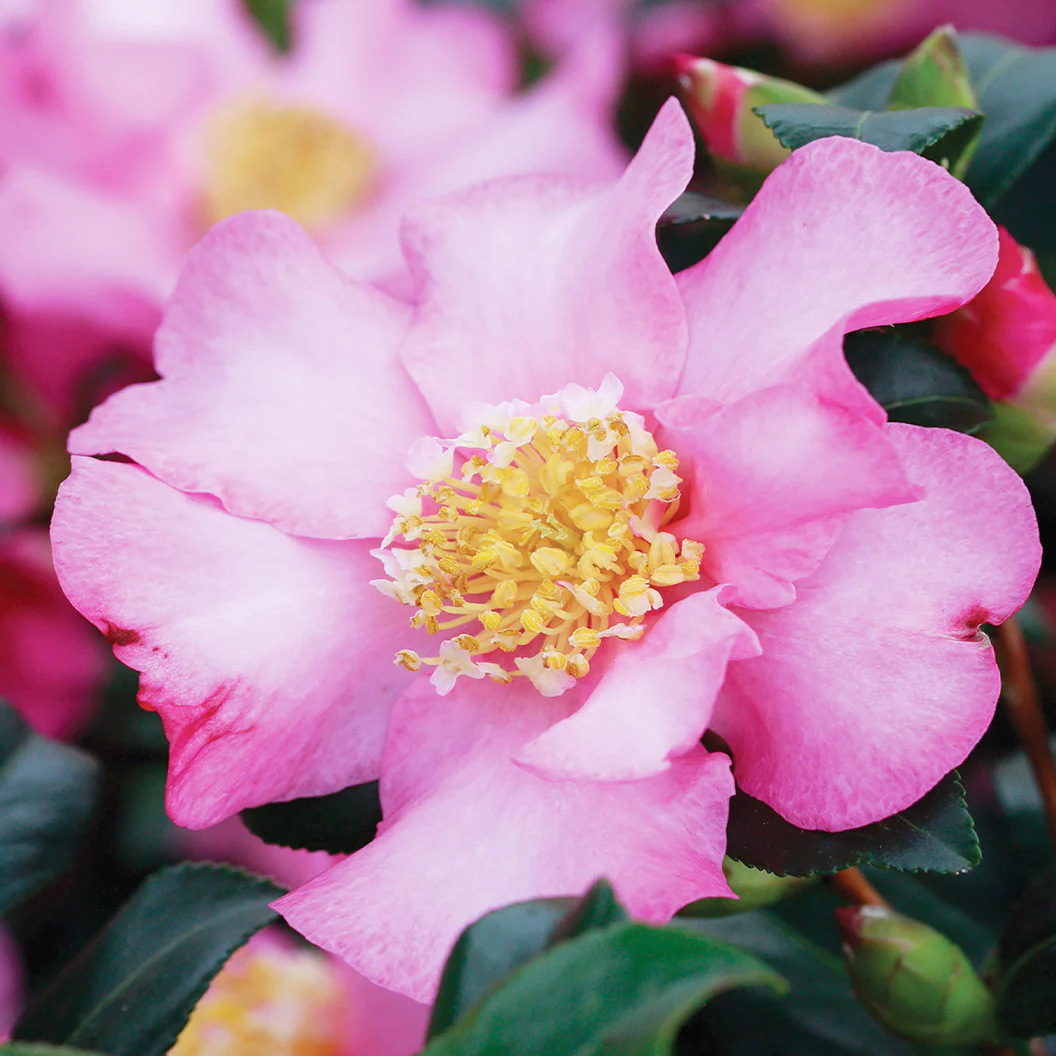
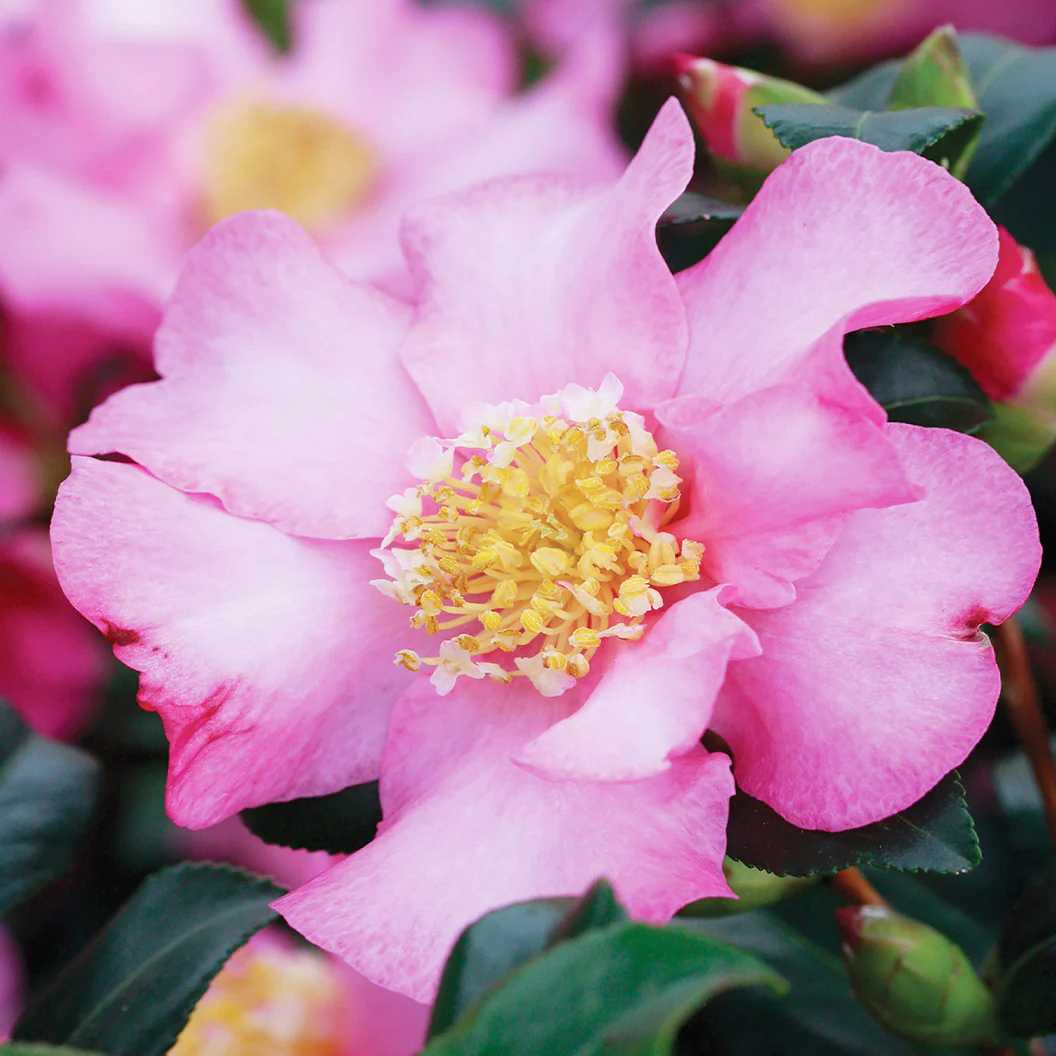
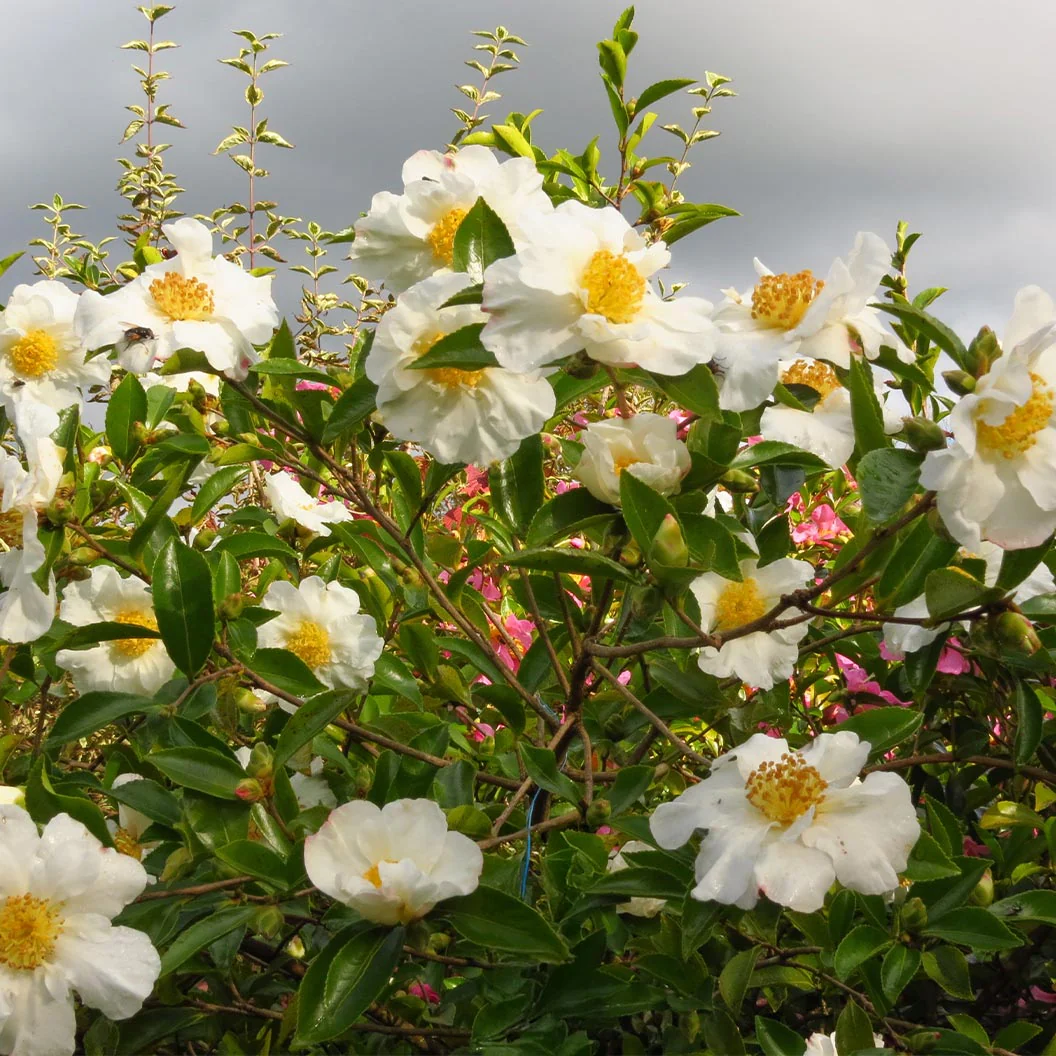
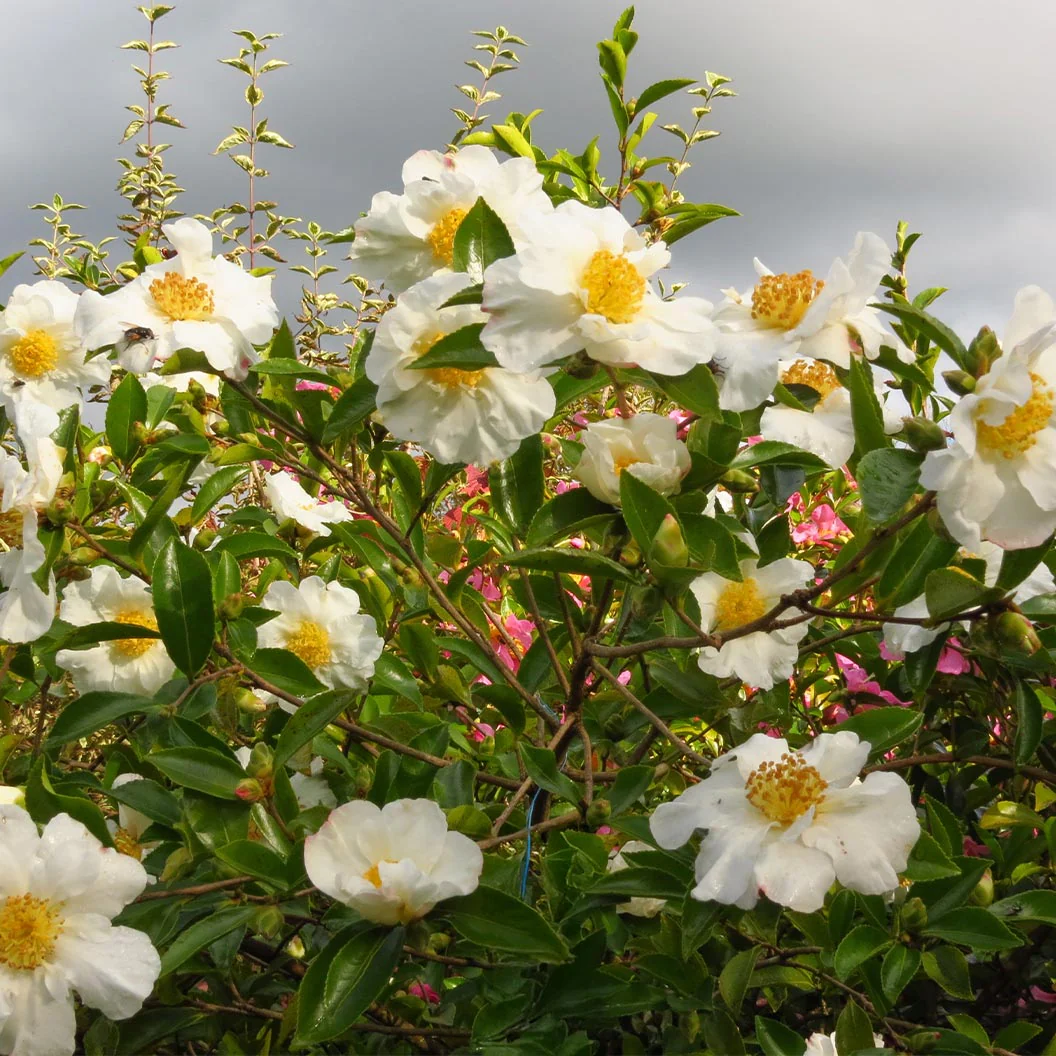
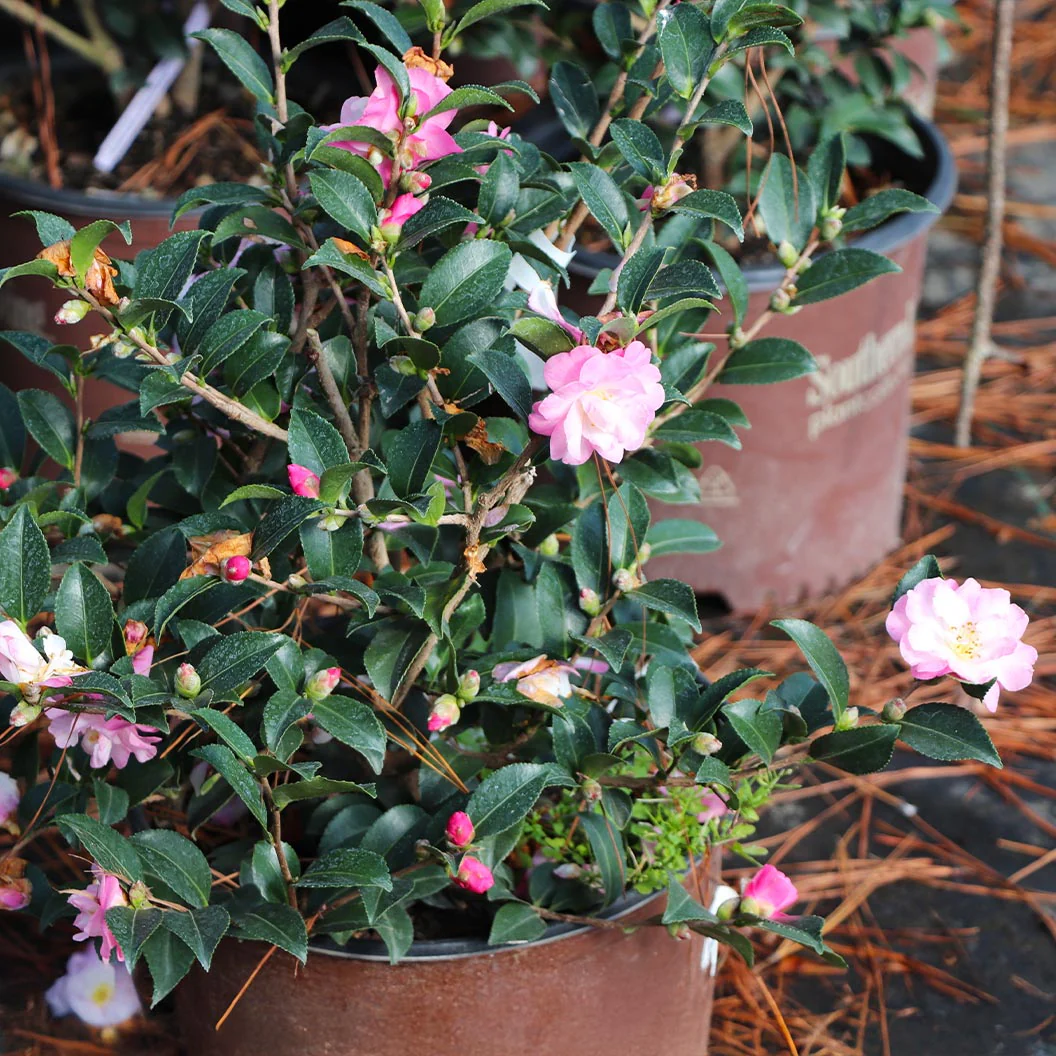
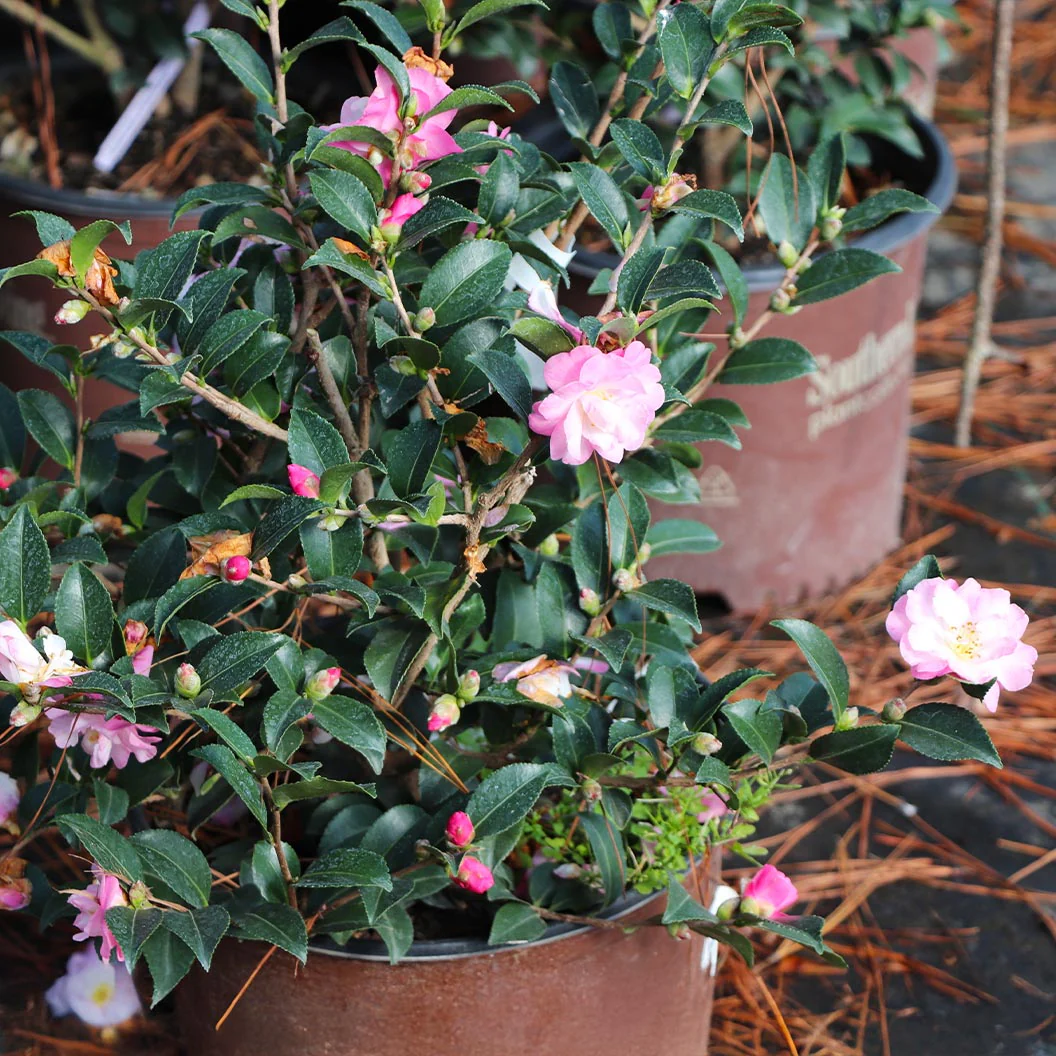
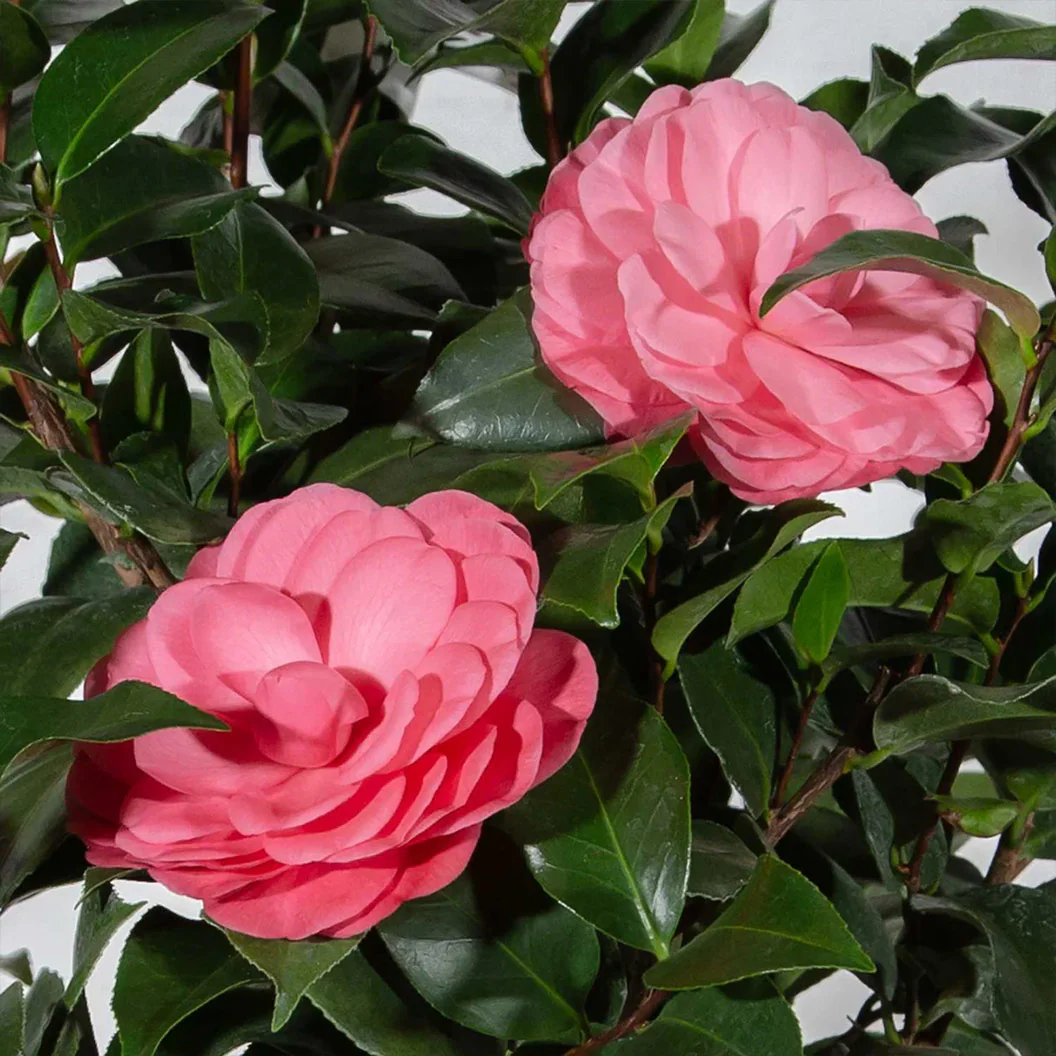
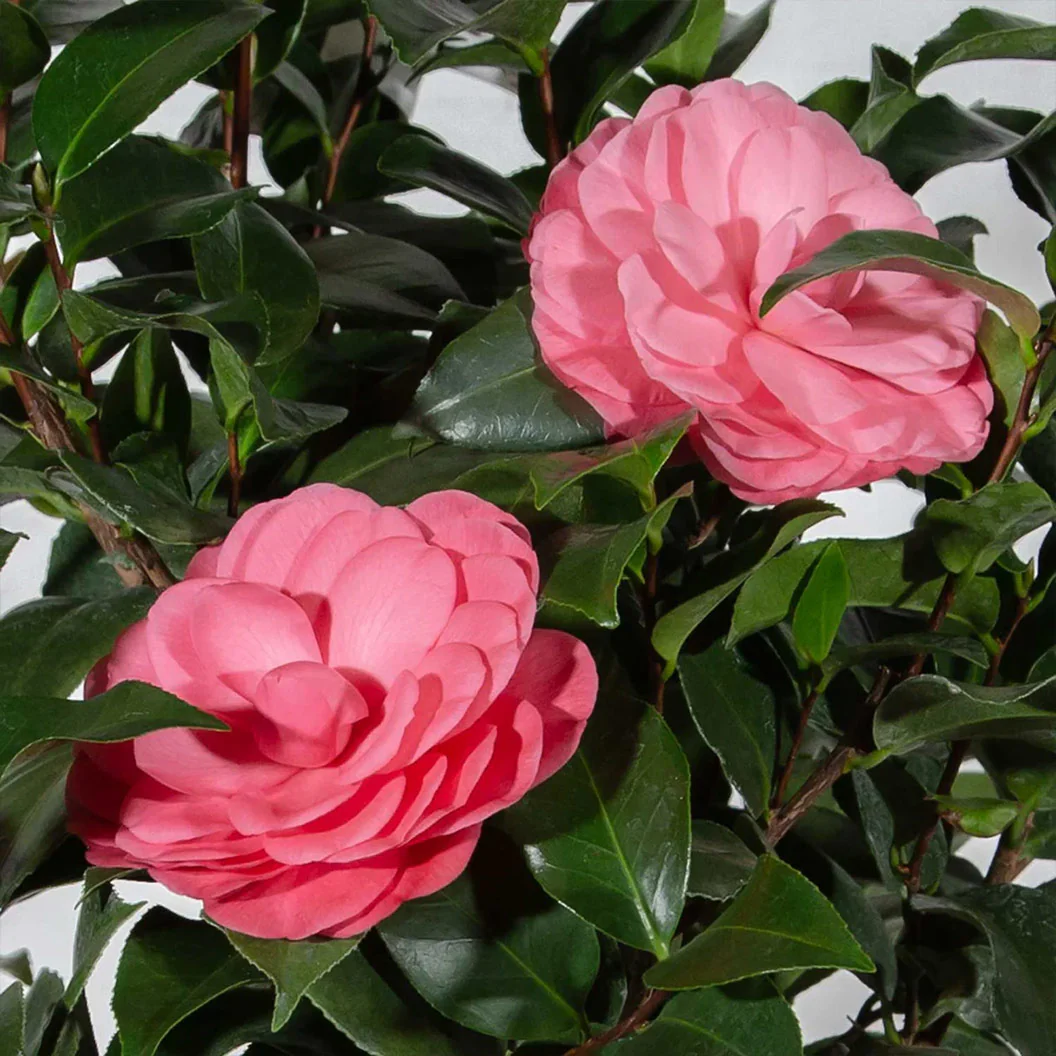
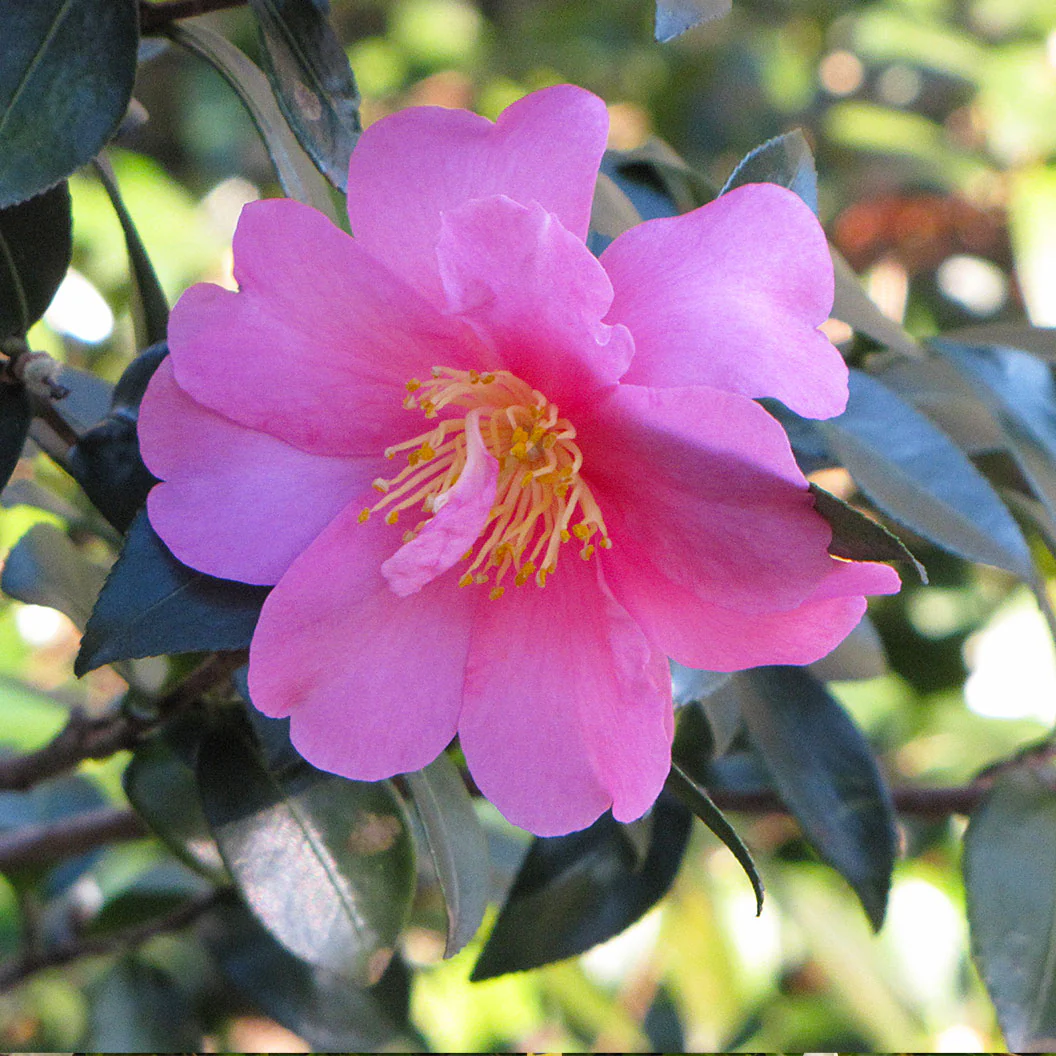
The 'Slim 'N Trim' Camellia is a fall-blooming variety that boasts an abundance of rose-pink flowers and sharply contrasting evergreen foliage. The 'Slim 'N Trim' has a uniquely dense and columnar growth habit, making it ideal for smaller gardens and landscapes. With a mature height of 6 to 8 feet tall and a narrow width of just 3 to 4 feet, 'Slim 'N Trim' makes for a truly versatile addition to any landscape. It works as an accent planting, a formal hedge, topiary, or even a small tree wherever space is limited. Plant it in groups or landscape borders, or even as an espalier (trained to grow flat against a wall). It also makes an excellent addition to cottage gardens, cut flower gardens, and partially shaded woodland gardens. The 'Slim 'N Trim' can even be grown in containers for urban landscapes and patios.
In addition to its versatility and year-round visual interest, the 'Slim 'N Trim' Camellia is low maintenance and resistant to drought, heat, and deer. It also has low water needs once established and can be planted in filtered sun to partial shade. The landscape possibilities are endless with the 'Slim 'N Trim' Camellia. Grow yours today!
Planting & Care
1. Planting: Camellias adapt well to various soil types but prefer a moist but well-drained acidic soil that is rich in organic matter. Plant in an area that gets morning and/or evening sun or all-day filtered sun, avoiding indirect afternoon sun.
Space 3 feet apart for a solid hedge; 6 feet or more apart for space between plants.
2. Watering: Camellias prefer moist but well-drained soil when establishing themselves, but are quite drought tolerant when established. Once established, regular rainfall should provide sufficient watering, but in times of drought, water only as needed to keep the rootball and surrounding soil damp but not overly moist. Camellias cannot tolerate constantly soggy or wet soil conditions, which often leads to the onset of root rot and other harmful plant diseases, so be careful not to over water!
3. Fertilizing: When planting camellias in less that fertile soil that is low in organic matter, mix an organic soil amendment, such as mushroom compost, composted manure, or your own homemade compost, at a 50/50 ratio with the soil removed from the planting hole. This will help get your plants off to a good start by stimulating root growth.
During the first spring, fertilize your camellias in late winter with a fertilizer made for azaleas, camellias, and rhododendrons (for acidic soil) or a shrub and tree fertilizer that contains sulfur and/or iron. Fertilize again, if needed, lightly in late summer.
4. Pruning: Pruning is not necessary, but if desired, you can prune camellias to maintain fullness or shape, to form into a small tree, or to revitalize an older plant. Prune damaged or dying branches just after the blooms have faded for best results.
Versatile and Uniquely Compact Camellia with Rose-Pink Blooms
The 'Slim 'N Trim' Camellia is a fall-blooming variety that boasts an abundance of rose-pink flowers and sharply contrasting evergreen foliage. The 'Slim 'N Trim' has a uniquely dense and columnar growth habit, making it ideal for smaller gardens and landscapes. With a mature height of 6 to 8 feet tall and a narrow width of just 3 to 4 feet, 'Slim 'N Trim' makes for a truly versatile addition to any landscape. It works as an accent planting, a formal hedge, topiary, or even a small tree wherever space is limited. Plant it in groups or landscape borders, or even as an espalier (trained to grow flat against a wall). It also makes an excellent addition to cottage gardens, cut flower gardens, and partially shaded woodland gardens. The 'Slim 'N Trim' can even be grown in containers for urban landscapes and patios.
In addition to its versatility and year-round visual interest, the 'Slim 'N Trim' Camellia is low maintenance and resistant to drought, heat, and deer. It also has low water needs once established and can be planted in filtered sun to partial shade. The landscape possibilities are endless with the 'Slim 'N Trim' Camellia. Grow yours today!
Planting & Care
1. Planting: Camellias adapt well to various soil types but prefer a moist but well-drained acidic soil that is rich in organic matter. Plant in an area that gets morning and/or evening sun or all-day filtered sun, avoiding indirect afternoon sun.
Space 3 feet apart for a solid hedge; 6 feet or more apart for space between plants.
2. Watering: Camellias prefer moist but well-drained soil when establishing themselves, but are quite drought tolerant when established. Once established, regular rainfall should provide sufficient watering, but in times of drought, water only as needed to keep the rootball and surrounding soil damp but not overly moist. Camellias cannot tolerate constantly soggy or wet soil conditions, which often leads to the onset of root rot and other harmful plant diseases, so be careful not to over water!
3. Fertilizing: When planting camellias in less that fertile soil that is low in organic matter, mix an organic soil amendment, such as mushroom compost, composted manure, or your own homemade compost, at a 50/50 ratio with the soil removed from the planting hole. This will help get your plants off to a good start by stimulating root growth.
During the first spring, fertilize your camellias in late winter with a fertilizer made for azaleas, camellias, and rhododendrons (for acidic soil) or a shrub and tree fertilizer that contains sulfur and/or iron. Fertilize again, if needed, lightly in late summer.
4. Pruning: Pruning is not necessary, but if desired, you can prune camellias to maintain fullness or shape, to form into a small tree, or to revitalize an older plant. Prune damaged or dying branches just after the blooms have faded for best results.
Description
Versatile and Uniquely Compact Camellia with Rose-Pink Blooms
The 'Slim 'N Trim' Camellia is a fall-blooming variety that boasts an abundance of rose-pink flowers and sharply contrasting evergreen foliage. The 'Slim 'N Trim' has a uniquely dense and columnar growth habit, making it ideal for smaller gardens and landscapes. With a mature height of 6 to 8 feet tall and a narrow width of just 3 to 4 feet, 'Slim 'N Trim' makes for a truly versatile addition to any landscape. It works as an accent planting, a formal hedge, topiary, or even a small tree wherever space is limited. Plant it in groups or landscape borders, or even as an espalier (trained to grow flat against a wall). It also makes an excellent addition to cottage gardens, cut flower gardens, and partially shaded woodland gardens. The 'Slim 'N Trim' can even be grown in containers for urban landscapes and patios.
In addition to its versatility and year-round visual interest, the 'Slim 'N Trim' Camellia is low maintenance and resistant to drought, heat, and deer. It also has low water needs once established and can be planted in filtered sun to partial shade. The landscape possibilities are endless with the 'Slim 'N Trim' Camellia. Grow yours today!
Planting & Care
1. Planting: Camellias adapt well to various soil types but prefer a moist but well-drained acidic soil that is rich in organic matter. Plant in an area that gets morning and/or evening sun or all-day filtered sun, avoiding indirect afternoon sun.
Space 3 feet apart for a solid hedge; 6 feet or more apart for space between plants.
2. Watering: Camellias prefer moist but well-drained soil when establishing themselves, but are quite drought tolerant when established. Once established, regular rainfall should provide sufficient watering, but in times of drought, water only as needed to keep the rootball and surrounding soil damp but not overly moist. Camellias cannot tolerate constantly soggy or wet soil conditions, which often leads to the onset of root rot and other harmful plant diseases, so be careful not to over water!
3. Fertilizing: When planting camellias in less that fertile soil that is low in organic matter, mix an organic soil amendment, such as mushroom compost, composted manure, or your own homemade compost, at a 50/50 ratio with the soil removed from the planting hole. This will help get your plants off to a good start by stimulating root growth.
During the first spring, fertilize your camellias in late winter with a fertilizer made for azaleas, camellias, and rhododendrons (for acidic soil) or a shrub and tree fertilizer that contains sulfur and/or iron. Fertilize again, if needed, lightly in late summer.
4. Pruning: Pruning is not necessary, but if desired, you can prune camellias to maintain fullness or shape, to form into a small tree, or to revitalize an older plant. Prune damaged or dying branches just after the blooms have faded for best results.